
Note: I don’t know everything about how to prevent back pain from work, I am no expert. This is simply my learnings from my experience. If you disagree with anything written in here, or feel like I am misinformed, please leave a comment on the post.
My name is Tom. I am 26 years old, I am 6 ft 1 inches tall, and I weigh 86 kilograms (with 0.8 kilograms added on due to too much cheese at christmas). Like 8 out of 10 people in the world on average, I have unfortunately experienced back pain since I was 15 years old.
How it started
My first memory of having a problem was on the rugby pitch. I was in a training session and ran into a ruck to defend against invisible opposition. I went into a low position (see below) as I had been instructed since a small child, and all of a sudden I felt a pain that sent me to the floor. It seemed to be coming from the lower back, but it also spread across my glute muscles and it seemed like a knife was being twisted in the very middle of the bottom of my spine. Back then (as is the typical nature of some rugby coaches), I was told that I should either man up or get the hell off the pitch. It was then that I proceeded to hobble (barely) to the nearest building to find somewhere to lie prone until I could figure out my next move. After managing to get home with some assistance, I had a hot bath and slept until the next day. Simple tasks that required a range of movement like putting on socks and shoes were difficult and painful, but this eventually subsided after a week or so (sometimes it can be longer), albeit with a physio session in the middle which really didn’t do much to help me understand the problem.

The scenario that I explained above is what I now call a “flare up”. These “flare up”’s have come and gone over the years. It is my belief at least that in my school and university years, they occurred very infrequently (I am only going from memory). However, I have had some periods in my life where the problem just doesn’t seem to go away (like the last few months). I have had other times where I have been immobilized in other areas (e.g., front of the leg), and upon inspection of physio I was told that it is all tied into issues with my lower back.
Entering the world of work
At my very first desk based job, I was put through a mandatory ergonomics assessment. What a chore right? Someone came to my desk, and told me that the cool looking chair was wrong, and the ugly looking chair was right (Hell no!). I had the chair height all wrong (this person knows nothing because having it really high is way comfier and I feel like piloting a spaceship) and worst of all; she informed me that a piece of software on my laptop would make a “ding” noise every 30 minutes or so to tell me to “get up and walk around”. She left and I kindly thanked her, before returning the old chair back to my cube, adjusting it to how it was before and fetching the python script from my coworker that stopped the annoying software from making the “ding” noise over and over.
During my time at this job, I started a bit of a revolution in my personal fitness after hitting a slump from hanging up my rugby boots. I transformed into an avid gym goer (“hadoken!‘), as well as an avid runner (“run forest!”). While they eventually subsided, I recall these flare ups posing as a considerable barrier to this transformation at the start. I recall maybe having multiple flare ups in the space of about 6 months. If I had listened to the ergonomic professional, would things have been different? Maybe, maybe not. Anyway what the heck, the pain went away so who cares.
The next job: An ongoing saga
Fast forward to my next job. On my first day I was flown to Cork in the Republic of Ireland for 6 weeks of drinking training. Down I sat in the conference room with the standard chair (see below) and on the 2nd 8 hour day, around 5 hours in, the pain started. It actually started in my neck this time around, but eventually the problem spread and before I knew it my lower back joined the party. I went to see a physio whilst in Ireland, and I spent the rest of the trip trying to get it back in a state where I wasn’t in pain.

Upon arriving back in London after my induction, I had another mandatory assessment. This time around I was more prepared to listen. After all, I had been through a painful time, and this time I wanted to get it right. Unfortunately I was not much more prepared to listen than I had been at my previous employer. However, I began to appreciate the importance of “ergonomics”. I need to make sure while I slave away at my brand new jobs, that I sit in the “proper position”. Getting the right chair and the right accessories.
Solving my problem
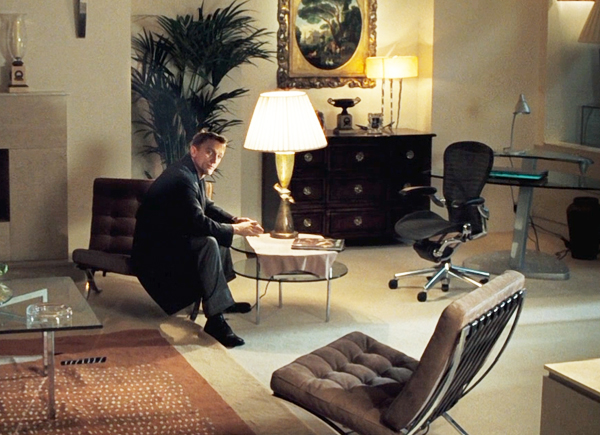
In order to combat back pain once starting at my current employer, I made investments into home office equipment that I thought would be my saviour. An Expensive chair with a sexy name like “aeron” for hefty price tags that would put me in an ergonomic position so I can sit for hours to my heart’s content. Couple that with a monitor arm to put my neck at the right height and we are all good right? No slouching, no perching, no sitting with my legs crossed (I can’t do that anyhow), these are exactly what I need to be avoiding.
Or so I thought
Rather unfortunately for me, while the ergonomic chair (and even the standing desk) might have helped me in some ways, the last 6 months have been a slow, slippery slope towards getting to a stage where the pain persisted and became unbearable. Gone were the days where I just took it easy for a week and waited for a reset. I was now at a stage where walking 200 meters to the shop was unbearable, and sitting (or standing) at my desk was something I could only dream of. I endured severe sciatica, which can only be described like electric shocks going down the back of your legs, and muscle spasms which wouldn’t stop even if I was lying completely still. For short periods it left me unable to walk. I had no choice but to sign off work.
How bad was it?
This is always a hard one for me to evaluate, but I would rank the few weeks where I was completely immobile as some of the most depressing weeks of my life. Not only can you not do anything, but day to day tasks become difficult.
Impatience reaches an all time high as you feel stupid not being able to get in and out of cars properly, unable to put your socks and shoes on unassisted, and defeated with pain from the smallest of tasks like a short walk into a shop, or a trip upstairs to grab a jumper.
Self esteem takes a hit too. Don’t underestimate what might go through your head when you get hit by something like this for even a few weeks. Will it ever go back to normal? Will I ever be active again? Will my girlfriend get fed up with me if she has to keep helping me like this (she was half fed up with me anyway l-o-l)? You start to wonder how long this storm will last. The reality is that there isn’t an answer. For some people, this is a problem that can last years. That can take a toll on an individual.
Finally, your mood and attitude can take a hit. Given I am 26, I suppose it isn’t totally unreasonable for one to assume that I am completely able bodied. I should be shaking my hips like many have seen me do on any standard all hands night out, right? There’s nothing more defeating than struggling out of a taxi whilst getting out at the hospital to get “hurry up, hurry up, we are blocking the street”. The fact that the action is so slow and painful is infuriating enough. Getting called a lazy liar for asking the train station steward to let you through the exit gates so you can get to the train easier left me in fits of rage. Being barged in public when I am able bodied is annoying, but when immobile like this left me, it made me furious. Soon enough I was sick of the world and everyone in it.
Why am I saying all this?
Well I promise it isn’t so people can pat me on the back and tell me it is okay. I am saying this because I want as many people as possible to know that this sucks. It’s not a “oh god yeah my back is sore and it’s giving me some grief”, it really is a problem that can leave people immobilized, in some cases with damage that can’t actually be properly fixed.
What is the problem in my case?
I have a protrusion of a disc in my lower spine (L4-L5). Discs are jelly like objects that sit between each vertebrae in your spine, acting like shock absorbers. If they protrude (like mine do), they can press into one or some of the many nerves that run down your back, which (trust me) then causes havoc through your nervous system and alarm bells (pain) start to ring.
What’s the solution?
Right now, I am working on it. If you get yourself in this position, there is no magic pill. The age old “Just get some rest” could well make things worse, but “just get moving” can become impossible if the problem leads to great pain and very restricted movement. I had an epidural (or in other words a back injection) of steroids that reduce the pain and irritation in the area, which should in theory leave me more free to perform rehab (which I was already doing pre-flare-up) that has been assigned by my therapist. I am also getting acupuncture done once a week. Realistically, I have been told that unless I build my body to work against the herniation that I have, this problem will repeat over and over and over. The problem is there now and there is little to nothing I can do to fully fix the problem in the mid to long distance future.
Why is this relevant to you?
It simply could be that my problem is that I was handed a crappy set of genes. You’re probably not wrong. There are a few people in my family that have struggled with this problem over the years. However none of them have had it so severely (up until my grandparents at least). Could this be because of my career? Well, again I can’t say for certain. But I suspect it could well be the case. Time and time again over this last month I have been asked what I do for a living. The response of “software developer” has most of the time led to an “ah yes”, followed by a long discussion on how I practice good desk hygiene. Below are two pieces of advice I was given from professionals along the way, and I hope that they peak your interest.
There is no such thing as a perfectly ergonomic position
If you think your Herman Miller chair is your one way ticket to a full day of working in a seat, I would encourage you to think again. It is considered by many that prolonged sitting of any kind can lead to the same symptoms that I have experienced over the last few weeks. Tim Cook (CEO of Apple) even said that sitting is the “new cancer”, and stated that standing desks were purchased for each employee at the apple campus. Could you ignore this advice and be just fine? Sure. But I would implore you to read the previous sections that outline the pain these problems cause before deciding whether this is a risk you want to take.
We all need to be somewhat stationary to do our jobs (unless there is some ingenious new method I have not heard of), so how else can you work? Standing up? Well yes, but again, staying static, even standing for prolonged periods can bring its own problems, especially if you’re slouching around, which I have actually found hard to catch myself doing. The key is movement. I have been told now by a couple of professionals that changing positions frequently (literally as frequently as possible) is the best way to go. Sure, sit for a little bit, but switch things up. Stand for an hour or so, move over to the sofa and put your feet up. Most importantly, “ding!”. Move away from the computer! The annoying software was there for a reason that I can now understand. Take a work call on your phone and walk in the park, allhands while doing chores around the house. This might infuriate some, but unfortunately I don’t see any other way of mitigating the risks I have mentioned above.
Ergonomics aren’t completely useless: making sure we are enabled is critical!
Like many companies out there, I work at a fully remote company. There is no office attendance policy, so instead we make our office the home. Therefore, the days of the ergonomic assessor coming round to the desk have gone. The pre-purchased and approved furniture (that was expensive for a reason) is no more, and the process of making the office a safe place (or not doing anything at all) is now in the hands of the employee. The cheaply made desk furniture that can squeeze into the corner of your bedroom has arisen, as well as cheaply made chairs that do nothing to keep one safe. Even worse, some might find their first month at a new job working from a kitchen table in a wooden chair. What is the protocol in place at your company for a new joiner in such a position? Do you have one?
All of this made me ask the question, “is having a safe environment to work no longer the employers responsibility?”. I pondered over this, and it somewhat reminded me of the Uber workers rights cases of the past. While I work for my employer, should they not be responsible for at least trying to ensure that I am helping myself? While this may not be law, I think that any business should want what is good for their employees. What exactly does that look like? I’m not so sure.
I am lucky enough to be at an employer that gives me a hefty office equipment budget, but after shelling out on a 14” Macbook Pro, I am left with barely a couple of pennies to spare. “Well maybe you should have thought before buying an outrageously overpriced machine” I can hear one say. Well yes, lesson learned. However I do think more could be done within every remote business to help employees take care of their health while they are working, particularly in the area of ergonomics. How exactly this is handled should be up to the specific business, but hopefully you will agree that ensuring an employee can keep themselves healthy while working is more important than the speed and power of their laptop.
Like high visibility jackets and hard hats at a construction site, I believe that employers should have an obligation to ensure that employees are using appropriate equipment before they embark on their working adventure. Like at my first job, the furniture might not be designed by Jony Ive, and it could even be second hand from a previous employer, but it darn should be available to help prevent real problems.
Please. Just don’t over work
I might have mentioned that I work at a virtual company. Once upon a time, over working would involve being sat in a deserted and dark office, with the lights occasionally turning on when a cleaner walked past. In the remote world, I can slap on some of my favourite tunes, grab a ready meal from the fridge and keep on cracking! Back into my cosy chair I go and more work to be done.
This doesn’t just ruin your social life. It doesn’t just burn you out and add to stress (which can lead to physical problems such as back pain). It means you’re spending even more time stuck. Not moving, not walking, stretching, running, bending. You’re driving yourself towards a world of problems, and trust me, they really hurt.